
Scoliosis
Find Relief With Scoliosis Treatment in Dallas, TX
A curved spine can be alarming to notice, whether it’s your child’s shoulder blade sitting higher than the other or your own back that seems slightly off-center in the mirror. At Spine Vue, we offer scoliosis treatments, from bracing to surgery, to improve your posture, comfort, and confidence. Our holistic approaches to scoliosis treatment can help you manage pain and discomfort and improve overall well-being. Contact us today to schedule a consultation and find out which treatment option is best for you.
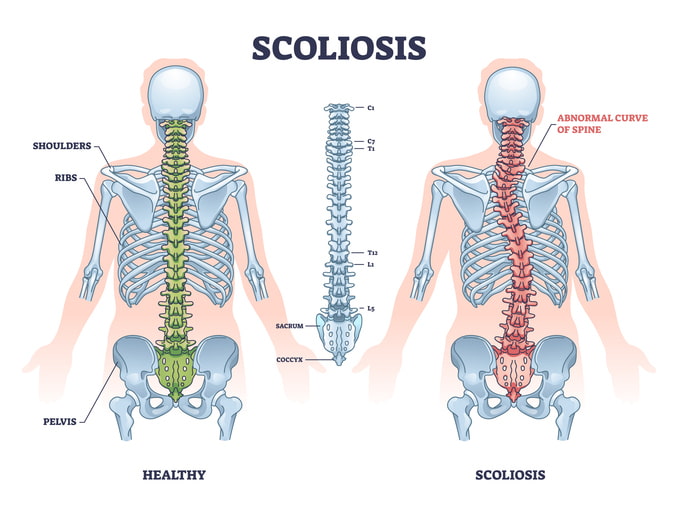
What Is Scoliosis?
Scoliosis is a spinal condition characterized by an abnormal sideways curvature of the spine, often described as an “S” or “C” shape rather than a straight line. It most frequently appears in the upper back. Scoliosis can also cause a corkscrew-like rotation of the spine, not just a side-to-side bend. Small curves typically don’t cause pain, which is one reason scoliosis spine disease often goes unnoticed until a school screening or routine physical exam catches it.
What Causes Scoliosis?
Most cases of scoliosis have no identifiable single cause. This form, called idiopathic scoliosis, tends to run in families, suggesting a genetic component. It most commonly develops in female adolescents, particularly during growth spurts. Other, less common causes include:
- Congenital Scoliosis – This is present at birth due to abnormal spinal development in the womb.
- Neuromuscular Scoliosis – Neuromuscular scoliosis is linked to conditions affecting the nerves and muscles, such as cerebral palsy or muscular dystrophy.
- Degenerative Scoliosis – This type of scoliosis develops in adults as spinal discs and joints wear down over time.
Signs and Symptoms of Scoliosis
Recognizing scoliosis symptoms early can make a meaningful difference in treatment outcomes. Common signs include:
- One hip appears higher than the other
- One shoulder blade is more prominent or raised compared to the other
- A visible curve in the back, usually in the upper spine
- Uneven waistline or clothes that hang unevenly
- A visible rib cage prominence when bending forward
Treatment Options for Scoliosis
Scoliosis treatment depends heavily on the size of the spinal curve and how much growth a patient has left. Here are a was scoliosis is treated:
- Bracing – Bracing is frequently the first line of defense for moderate curves in patients who are still growing. Back braces are custom-fitted to the specific curvature of the spine and are designed to prevent further progression during growth years. Bracing won’t reverse an existing curve, but it can keep a moderate curve from worsening.
- Physical Therapy and Scoliosis Therapies – Non-surgical scoliosis therapies, including targeted physical therapy, can help strengthen the back, ease discomfort, and improve posture. While exercise alone won’t correct the underlying curve, it plays a valuable supporting role in overall spine health and can complement bracing or post-surgical recovery.
- Surgery – For severe curves, surgery may be necessary to prevent further progression. The most common option is spinal fusion, where surgeons join vertebrae using bone grafts, metal rods, and screws. Vertebral body tethering is another approach that uses screws and a cord threaded along the spinal curve to straighten the spine. For young patients whose scoliosis worsens quickly, growing rods may be used instead.
Scoliosis in Children and Adolescents
Scoliosis is most often diagnosed during childhood or adolescence, frequently during a school screening or a pre-sports physical exam. Because scoliosis tends to progress fastest during growth spurts, catching it early allows more time for non-surgical options such as bracing to work effectively.
Bone maturity plays a major role in treatment decisions. Dr. Sean M. Jones-Quaidoo can use hand X-rays to check how much growth remains, since braces are most effective in children whose bones are still developing. Girls typically stop growing around age 14, while boys typically stop around age 16, though these ages vary by individual.
Coping with a scoliosis diagnosis can be emotionally challenging for teens already navigating physical and social changes. Encouraging open communication with friends, family, and even scoliosis support groups can ease the emotional weight of diagnosis and treatment.
When to See a Spine Specialist
If you notice uneven shoulders, an asymmetrical waistline, or a visible spinal curve in yourself or your child, it’s worth scheduling an evaluation with a spine specialist. Dr. Jones-Quaidoo will perform a physical exam, which may include the forward-bend test, and confirm findings with X-ray imaging to measure the exact degree of curvature.
Choose a spine specialist evaluation if you notice rapid curve progression, back pain, or breathing difficulty, since these signs suggest the curve may need more active management than observation alone.
We offer imaging technology that minimizes radiation exposure, which is especially important for children who may need repeated X-rays every six months to track growth.
How to Prevent Complications From Scoliosis
While there’s no guaranteed way to prevent scoliosis itself, patients can reduce the risk of complications. Try the following methods:
- Consistent Monitoring and Timely Treatment – Regular checkups allow us to catch curve progression early, before it requires more invasive intervention.
- A Healthy Diet – Adequate calcium and vitamin D intake support bone health.
- Regular Exercise and Physical Therapy – This helps maintain strength, flexibility, and posture.
- Evidence-Based Treatment Options – Alternative treatments haven’t been shown to correct spinal curves, so patients should rely on doctor-recommended treatments.
Frequently Asked Questions
Bracing doesn’t cure scoliosis or reverse an existing curve, but it can prevent a moderate curve from worsening throughout the remaining growth period, which may span several years depending on the patient’s age at diagnosis.
Complications from spinal surgery may include infection or, in rare cases, nerve damage. The spine may also continue curving above or below the surgical site, which is why ongoing follow-up care is important after any surgical procedure.
While scoliosis is most commonly diagnosed in adolescents, adults can develop degenerative scoliosis as spinal discs and joints wear down with age. Adult scoliosis often requires a different treatment approach focused on pain management alongside curve monitoring.
From Mild Curves to Complex Cases, We’ve Got Your Back
Most cases of scoliosis are manageable with the right combination of monitoring, bracing, or therapy, and severe cases have well-established surgical solutions backed by decades of clinical experience. If you’ve noticed signs of a spinal curve or want a professional evaluation, contact Spine Vue to schedule an assessment. Early diagnosis remains one of the most effective tools for keeping scoliosis manageable and protecting long-term spine health.